How AnSanAn Builds and Calibrates Electromagnetic Flow Meter Projects
An Electromagnetic Flow Meter project reaches our production floor long before final assembly. It begins when we translate a buyer's process into a controlled configuration: measuring diameter, liner, electrode, connection, pressure class, enclosure, power, output, communication, display, cable arrangement, and documentation.
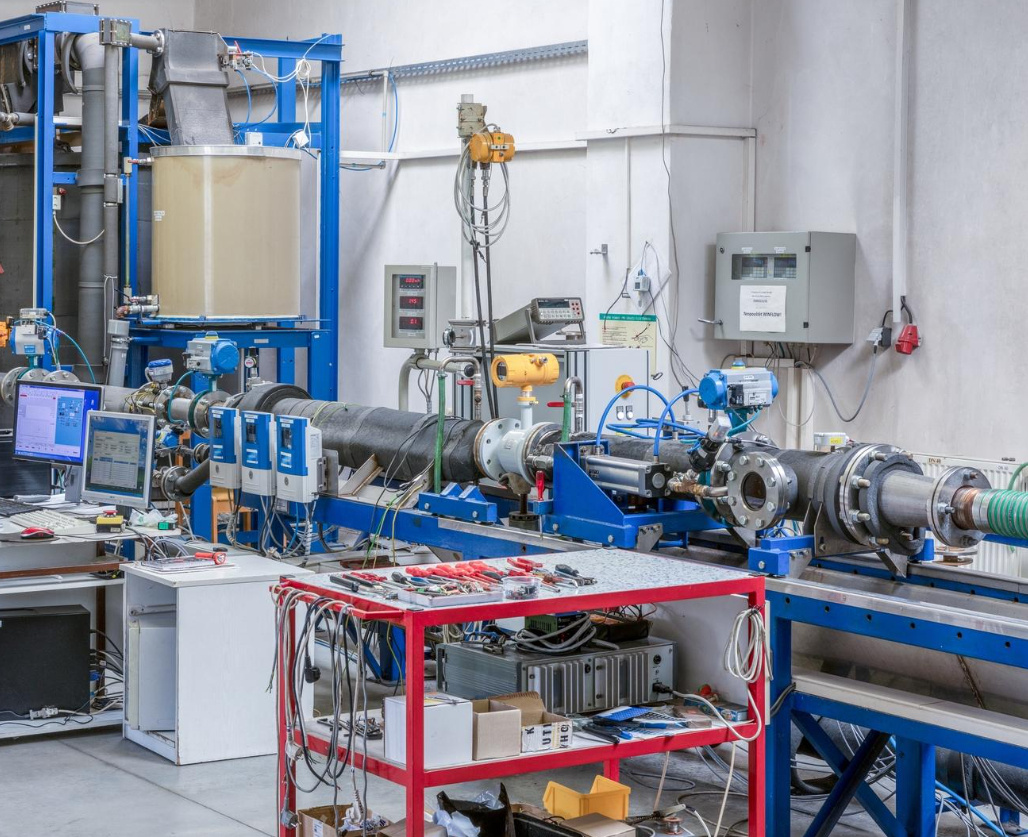
An Electromagnetic Flow Meter project reaches our production floor long before final assembly. It begins when we translate a buyer's process into a controlled configuration: measuring diameter, liner, electrode, connection, pressure class, enclosure, power, output, communication, display, cable arrangement, and documentation. If one of those details is vague, the finished meter may be mechanically complete yet wrong for the application.
AnSanAn Technology Group Co., Ltd. was founded in 2023 in Jinhu, Jiangsu, with an operating model that combines research and development, intelligent manufacturing, sales, and import-export support. Our 33,000-square-metre manufacturing base includes dedicated workshops, production lines, precision machining, assembly, and liquid- and gas-flow calibration resources. We use that capacity to turn approved instrument specifications into repeatable production records rather than treating each order as an isolated assembly job.
Table of Contents
1. Turning Process Data into an Approved Configuration
2. A Manufacturing Route Built Around Traceability
3. Liquid-Flow Calibration Before Shipment
4. Capacity Without Losing Order Control
5. Quality, Environmental, and Safety Management
6. From Packing to Site Commissioning
7. Project Support Across Multiple Instrument Families
8. Frequently Asked Questions
9. Discuss Your Electromagnetic Flow Meter Project with AnSanAn
Turning Process Data into an Approved Configuration
The first technical task is to define the measurement duty. For an electromagnetic meter, we need to know whether the medium is conductive, whether the pipe remains full, and how the minimum and maximum flows translate into velocity. We also review chemical composition, temperature, pressure, solids, cleaning method, pipe material, nearby fittings, power, signal, installation area, and local display needs.
This information drives the build. A corrosive liquid may require a different liner and electrode combination from municipal water. A remote transmitter changes cable requirements. Plastic piping may require a deliberate grounding arrangement. A control loop may need 4–20 mA, pulse, and digital communication, while a monitoring point may prioritise totalization and diagnostic access.
We issue technical confirmation before production so the buyer can check the configuration against the project drawing and control narrative. For OEM and ODM work, custom parameters, housings, communication protocols, tags, and documentation can be incorporated into that review. The goal is a stable approved baseline for engineering, purchasing, assembly, test, and final inspection.
A Manufacturing Route Built Around Traceability
Our Jinhu base covers 50 mu and contains three workshops and six production lines. CNC lathes, plate-forming equipment, precision assembly areas, and dedicated test resources support pressure, flow, level, and temperature instruments. Electromagnetic flowmeter assembly forms part of this wider instrumentation system, which helps us coordinate sensors, transmitters, process connections, and control interfaces for multi-instrument projects.
Traceability connects the physical meter to its order requirements. The configuration record should identify ordered materials, measuring size, connection, transmitter, power, outputs, and special inspection items. Assembly and test results then follow the same identity. This is particularly important when a project contains many similar-looking units with different tags or ranges.
Project stage | Record we control | Risk the record reduces | Buyer review point |
Application review | Medium, flow range, pressure, temperature, pipe and installation data | Incorrect measurement principle or size | Confirm process data and operating extremes |
Configuration approval | Liner, electrodes, connection, transmitter, outputs and options | Wrong materials or interface | Approve datasheet and drawing revision |
Material and assembly control | Unit identity, selected components and assembly checks | Mixed specifications within one order | Check tags and ordered construction |
Calibration and functional test | Test points, indicated values, output and totalizer checks | Unverified performance or scaling | Agree acceptance criteria before test |
Final inspection | Appearance, labels, documentation and packing list | Shipping or document mismatch | Reconcile quantity, tags and reports |
Handover support | Wiring, setup, installation and communication information | Commissioning delay | Provide site team with approved records |
This structure is more useful than relying on final inspection to discover upstream mistakes. Quality has to move with the order.
Liquid-Flow Calibration Before Shipment
Calibration compares the meter under test with a reference system under controlled flow conditions. At AnSanAn, professional liquid-flow calibration rigs support electromagnetic and other liquid-flow instruments. We calibrate and inspect each instrument under our ISO 9001 quality system before shipment. The purpose is to establish a documented baseline for the configured meter and identify problems in assembly, setup, indication, or output before the unit reaches site.
The test plan should reflect the purchase requirement. Typical checks can include multiple flow points, repeat readings, indication error, pulse or current output, totalizer operation, direction, display units, and basic diagnostics. Project-specific acceptance may also require tag verification, communication checks, or witnessed testing. We agree those expectations early because adding them after packing creates delay and unnecessary handling.
What an Independent NIST Study Shows
The National Institute of Standards and Technology has demonstrated why traceable calibration is a measurement discipline rather than a final switch-on test. In a study of a dynamic gravitational water-flow standard, NIST calibrated a fast electromagnetic flow meter against a static primary standard. For changing flows averaging 12 kg/s with 5 kg/s ramps or pulses, the integrated difference between the dynamic standard and the electromagnetic meter was reported as 0.008%, with a standard deviation of 0.012%.
Those results belong to NIST's controlled research facility, not to AnSanAn product claims. Their value for industrial buyers is the method: define the reference, control the test, account for response and uncertainty, and report the conditions. The NIST publication also illustrates the gap between a traceable laboratory comparison and an unsupported statement that a meter “looks accurate.”
Our factory calibration cannot compensate for a field pipe that runs half full or for an installation beside an unsuitable disturbance. It gives the commissioning team a known starting point. Field performance then depends on correct installation, configuration, grounding, hydraulic condition, and maintenance.
Capacity Without Losing Order Control
Our manufacturing system is designed for both project orders and repeat demand. Published production capability reaches 5,000 units per month, with daily output up to 300 units and a single-order capacity of up to 1,000 units. Standard lead times are generally 7–15 days, subject to configuration, quantity, materials, inspection scope, and documentation.
Capacity is useful only when order control remains visible. For a multi-unit project, we separate common requirements from tag-specific differences, freeze revisions before assembly, and align inspection with the approved list. Buyers can support this process by providing one controlled datasheet set rather than conflicting information across emails, drawings, and purchase notes.
For repeat orders, a stable configuration reference shortens review without eliminating it. We still check whether process conditions, standards, firmware, communication, or labeling have changed. “Same as last time” is helpful context, but it is not a complete technical specification.
Quality, Environmental, and Safety Management
AnSanAn maintains management-system certifications to ISO 9001:2015, ISO 14001:2015, and ISO 45001:2018. These systems provide a framework for quality, environmental management, and occupational health and safety. They do not replace product-specific approvals or project documentation, so any required certification, explosion-protection basis, material record, or inspection standard must be stated in the inquiry.
Quality communication is especially important for international orders. Model names, tag numbers, units, flange standards, power supplies, cable entries, and protocol versions should be written unambiguously. Drawings and datasheets need revision identifiers. Where translation could affect a safety or compliance statement, the approved technical wording should take precedence over informal descriptions.
We support factory audits, video tours, sample review, and project communication for buyers who need to qualify the manufacturing route. The right method depends on order value, risk, and schedule. A sample may be appropriate for a new custom interface; a witnessed calibration may be appropriate for a high-value measurement point; a document review may be enough for a repeat standard configuration.
From Packing to Site Commissioning
Instrument condition at arrival depends on more than the shipping carton. Flange faces, liners, electrodes, displays, cable entries, and accessories need suitable protection. Documents and loose items should be identifiable against the packing list. Long storage, humid environments, or outdoor staging may require extra preservation agreed before shipment.
The site team should receive the approved datasheet, wiring information, installation instructions, calibration record, configuration values, and any communication details needed for integration. Before filling the line, installers should check flow direction, sensor orientation, grounding, gasket position, bolt loading, cable routing, and accessibility. After start-up, the team should confirm a stable zero at no flow where feasible, verify output scaling, compare flow with the process condition, and record the as-left configuration.
We encourage buyers to keep the factory configuration and commissioning record together. If a meter is later replaced or re-ranged, that history helps maintenance staff separate instrument change from genuine process change.
Project Support Across Multiple Instrument Families
Our portfolio extends beyond electromagnetic flow meters to ultrasonic, vortex, and turbine flow meters, as well as pressure, level, temperature, valve, and gas-analysis products. This matters when a project contains conductive water, steam, gas, and chemical service. Instead of forcing every duty into one measurement principle, we can review each point against its medium and control objective.
Multiple communication protocols, explosion-protection options, high-temperature construction, and anti-corrosion configurations are available across relevant product families. The exact availability and compliance basis must be confirmed by model and destination requirement. Our engineering team can help organise the instrument list, but the plant designer or owner retains responsibility for system design and local regulatory acceptance.
The most efficient collaboration starts with a complete instrument schedule and highlights the unusual points. Standard water loops can move quickly; corrosive, abrasive, hazardous, hygienic, or low-conductivity duties deserve focused review. This risk-based method keeps engineering time where it has the greatest effect.
Frequently Asked Questions
Can AnSanAn configure electromagnetic meters for OEM or ODM projects?
Yes. We support custom process parameters, housings, communication protocols, tags, and related project requirements. Feasibility, quantity, documentation, and validation needs are reviewed before the configuration is approved.
What information should be included in an inquiry?
Provide the medium and conductivity where known, minimum/normal/maximum flow, pipe size and material, temperature, pressure, solids, chemical concentration, connection standard, power, outputs, communication, enclosure, installation area, and required documents. A piping sketch is helpful where straight run is limited.
Can buyers arrange an audit or witnessed test?
Factory audits, video tours, samples, and agreed inspection activities can be supported. State the witness points, acceptance criteria, report format, and schedule during quotation so they can be incorporated into the production plan.
How long does a standard order take?
Standard lead time is generally 7–15 days. Quantity, custom materials, special protocols, approvals, witnessed testing, and documentation can change the schedule, so the confirmed delivery date follows technical approval.
Discuss Your Electromagnetic Flow Meter Project with AnSanAn
A dependable Electromagnetic Flow Meter order is built from three aligned records: the real process condition, the approved configuration, and the verified test result. Send our team your instrument schedule, fluid data, piping arrangement, control interfaces, and acceptance requirements. AnSanAn can prepare a technical proposal, confirm the manufacturing route, and support the project from configuration through calibration and handover.